
How to Plan Thailand Travel Days (Flights, Ferries, Vans, Reality)
Most Thailand routes don’t fail because the destinations were wrong.
They fail because the days between them were treated like empty space.
A one-hour flight becomes half a day. A ferry departure fixes your morning. A “quick van” absorbs your afternoon. Bangkok traffic quietly erases the margin you thought you had. Nothing dramatic happens — but the structure tightens until the trip starts to feel rushed, even when the itinerary looks reasonable on paper.
This article breaks down how Thailand travel days actually work in practice, and what changes when you design around movement, timing windows, and real energy patterns instead of optimistic transit estimates.
If you want a route that holds beyond the first few days, the day itself is where Thailand needs to be understood first.
Thailand looks simple on a map.
Bangkok sits roughly in the centre. Chiang Mai is “just” an hour north by air. The islands appear clustered along the Andaman coast or in the Gulf. Distances seem manageable. Flights are frequent. Ferries run daily. At first glance, the country feels compact and easy to move through.
In practice, Thailand travel days rarely unfold as neatly as they appear in route summaries.
A one-hour flight reshapes half a day. A van transfer absorbs more energy than its duration suggests. A ferry departure fixes your schedule long before you board. Bangkok traffic expands what looks like a short urban hop into something that quietly consumes the afternoon. None of these realities are dramatic. They are simply conditions — but they determine whether a route holds or begins to fray.
The mistake isn’t ambition. It’s compression.
Thailand rewards intelligent pacing, but it exposes tight sequencing quickly. When movement is treated as a gap between experiences rather than an active part of the day, the structure becomes fragile. Transfers start to stack. Arrival resets disappear. Evenings feel narrower than expected.
Designing strong Thailand travel days means recognising that distance and duration are not the same thing. It means understanding how airports, piers, highways, and city congestion reshape timing. It means separating heavy transfer days from experience-heavy days instead of blending them.
Before choosing which islands to combine or how many cities to include, it’s worth understanding how travel actually unfolds across the country. Because in Thailand, the quality of the route is decided less by the destinations — and more by how the days between them are structured.
Why Thailand Looks Smaller Than It Is
Thailand is geographically compact compared to many large travel destinations. On a map, the north-to-south stretch looks manageable. Major cities are connected by air. Coastal areas appear clustered. Island groups seem close enough to combine within a few days.
The visual scale creates a quiet assumption: movement will be easy.
This is one of the first misconceptions that reshapes Thailand travel days — and it’s a core reason why many first drafts need rethinking once you apply the Thailand itinerary planning lens.
A route such as Bangkok → Chiang Mai → Phuket appears efficient. The flight times are short. The distances are not extreme. But what the map does not show is the time required to exit one base, reach the airport, navigate security, board, land, collect luggage, transfer into the city, and check in. Even when everything runs smoothly, what looks like a one-hour segment often occupies four to six hours of usable time.
The same distortion appears with islands. Koh Phi Phi, Koh Lanta, and Phuket look close together. The Andaman coast appears like a tight cluster. In reality, departure windows, pier transfers, weather conditions, and onward road journeys stretch those segments beyond their listed duration. Each leg becomes a structural element of the day, not a footnote.
Northern Thailand creates a different version of the same illusion. Chiang Mai, Pai, and Chiang Rai appear within easy reach of one another. But mountain roads slow travel. Bus timetables compress options. Arrival times push into afternoon hours that were originally imagined as sightseeing time.
When planning Thailand travel days, the error is not choosing multiple regions. It is assuming that short distances equal light days. The country rewards focus and sequencing. It resists compression.
This is why many first drafts of Thailand routes feel balanced on paper but tight in practice. The movement between regions occupies more cognitive and physical bandwidth than anticipated. Energy dips sooner. Evenings shorten. The structure begins to narrow — exactly the kind of drift described in what a realistic travel day actually looks like.
Understanding scale correctly is the first step toward designing a route that feels coherent rather than hurried. Thailand may look compact, but its travel rhythm is shaped less by kilometres and more by transitions.
Flights vs Trains vs Vans — What Changes Structurally
Choosing how to move between regions in Thailand isn’t just a transport decision. It’s a structural one. Each mode reshapes the rhythm of Thailand travel days in a different way — and changes how much the rest of the itinerary can realistically carry.
Flights feel efficient. They are frequent, relatively affordable, and connect major hubs quickly. But flights concentrate friction. Early wake-ups, airport transfers, security queues, boarding delays, baggage claim, and onward city transfers compress into a tight block of effort. Even when the air time is short, the psychological effect is heavier. The day bends around the flight — which is why many routes work better when flights are treated as the centre of the day, not something “squeezed in” around experiences. This is exactly the logic behind arrival and departure days matter.
Overnight trains are often framed as a way to “save time.” In theory, you travel while sleeping and arrive ready to explore. In practice, sleep quality varies, arrival times are early, and the body absorbs more strain than expected. The first half of the following day is rarely as productive as the itinerary assumes. What looked efficient becomes subtly draining — particularly on faster-paced routes where recovery time was never designed in.
Vans and buses create a different kind of compression. A four-hour road journey doesn’t just consume four hours. It absorbs morning preparation, hotel checkout, pickup windows, unscheduled stops, and uncertain arrival timing. You may reach your next base mid-afternoon — technically early enough to explore — but energy and orientation time reduce what is realistically possible.
This is where Thailand travel days are most often miscalculated. Transport is treated as a neutral bridge between experiences. In reality, it is one of the most energy-intensive segments of the trip — and your pacing model needs to reflect that, not fight it. If the route is built around sustained momentum, the day will feel heavier than expected; if the route is built around realistic recovery patterns, it holds. This is the practical difference described in travel pacing explained.
Official passenger data from Airports of Thailand shows the scale of domestic air traffic moving through hubs like Bangkok and Phuket each year. High volume is not inherently a problem, but it helps explain why “quick flights” rarely feel isolated from queues, congestion, and variability. Movement operates within a larger system.
The structural question isn’t which transport is fastest. It’s how each mode interacts with the rest of the day. Flights concentrate effort into short bursts. Trains distribute it across the night. Vans stretch it steadily across daylight hours.
Strong routes separate heavy movement days from experience-heavy days. They avoid stacking early departures with late arrivals and evening commitments. They recognise that different transport choices require different recovery patterns.
Once transport is viewed structurally rather than optimistically, the design of the route changes. Not because you move less — but because you move more intelligently.
Ferry Timing and Island Logic
Island routes are where planning assumptions about timing most often unravel.
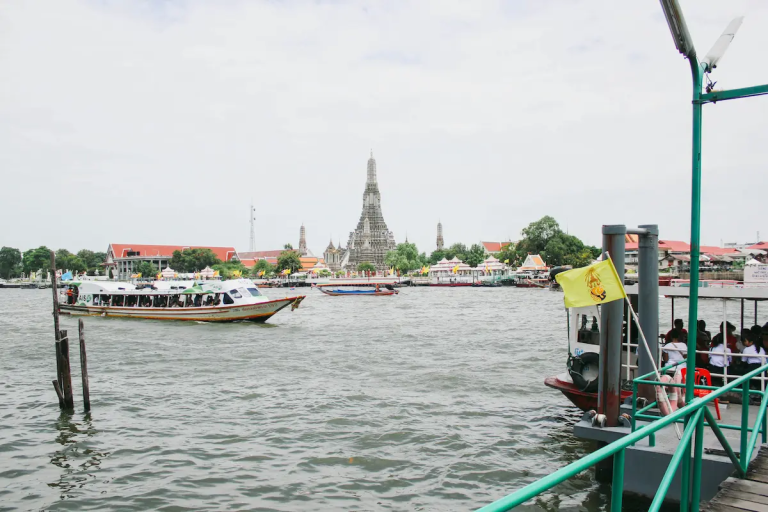
On paper, ferry crossings look straightforward. A departure time. A duration. An arrival time. When you scan a booking page, the journey appears contained — a clean block between two destinations. But ferry movement reshapes Thailand travel days in ways that aren’t obvious until you’re inside them.
First, departure windows are fixed. You don’t leave when you’re ready; you leave when the boat leaves. That single constraint determines checkout timing, transfer pickup, and how early you must arrive at the pier. Unlike road transport, which can adjust slightly to traffic or driver timing, ferries operate on a narrower schedule. Missing one can mean losing half a day — and when the itinerary is tight, that loss often triggers a cascade of rushed decisions and forced compromises.
Second, pier transfers add layers of friction. Many island routes involve hotel pickups, waiting areas, ticket checks, luggage handling, and sometimes additional boat transfers. Even short crossings often require earlier arrival buffers. What appears as a two-hour ferry can quietly absorb four to five hours of the day once all segments are included — which is why buffer time in itineraries is not a luxury on island routes, but part of what keeps the structure intact.
Weather adds another variable. While major routes run reliably in high season, wind and sea conditions can alter speed or timing, especially during shoulder months. This variability doesn’t usually derail a trip — but it can compress an already tight plan.
This is why island hopping compresses Thailand travel days more than travellers expect. Each new island feels close on a map. But each leg introduces fixed timing, transfer coordination, and arrival reset periods. By the time you reach your accommodation, orientation and recovery consume what remains of the afternoon.
The structural mistake isn’t visiting multiple islands. It’s stacking them without spacing. When ferry segments are treated as light transitions rather than anchor points, the rhythm tightens quickly — the same failure pattern described in underestimating transitions.
Designing island routes works best when ferry departures define the day, not when they are squeezed between highlights. Movement becomes the primary feature of that day, with lighter expectations layered around it.
Once ferry logic is recognised as a governing factor rather than a background detail, island routes feel calmer — and far more coherent from one base to the next.
Bangkok Traffic and Urban Friction
Bangkok changes the structure of Thailand travel days in a way that surprises many first-time visitors.
The distances between major areas — Sukhumvit, the Old Town, Chatuchak, Riverside — do not appear extreme. On a map, they look manageable. But time in Bangkok is shaped less by kilometres and more by congestion patterns, transfer modes, and timing windows.
Peak traffic can expand a short taxi ride into a long delay, particularly during weekday mornings and late afternoons. A route that seems comfortably spaced in theory can narrow quickly when travel time doubles. This is why assumptions about “just moving across the city” often undermine otherwise balanced plans — something frequently underestimated in early drafts of a Bangkok first-time itinerary.
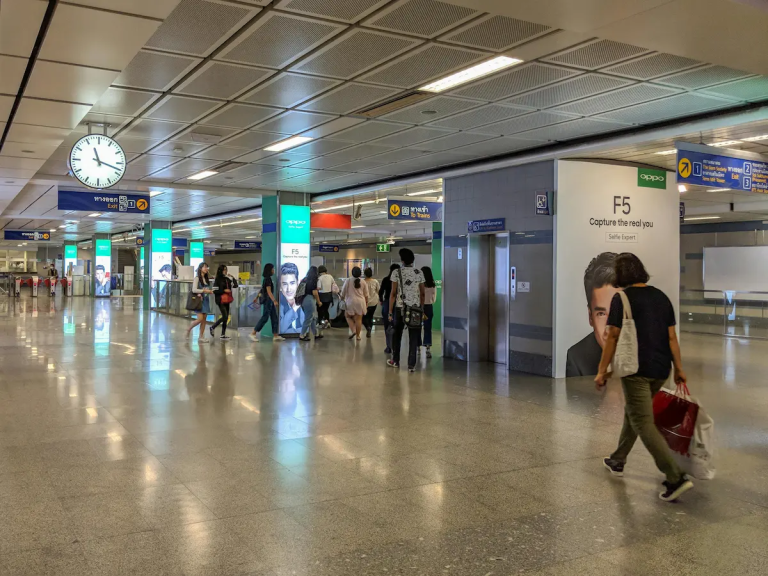
Public transport mitigates some of this friction. The BTS and MRT systems offer reliable corridors across parts of the city, but they do not connect everything directly. Switching between rail lines and taxis introduces additional layers of timing and coordination. Even efficient systems require walking, navigation, and orientation time.
Urban days also accumulate cognitive load more rapidly. Bangkok is dense, fast-moving, and sensory-heavy. Even when attractions are close, navigation decisions and environmental intensity absorb energy. This is where overpacking city days becomes visible. Visiting three major areas in one day may appear efficient, but the transitions between them consume more bandwidth than expected.
The structural mistake is treating city movement as incidental. In reality, it shapes the rhythm of the entire day. Stacking cross-city transfers between multiple anchor points often compresses afternoons and shortens evenings.
This is also why understanding how long you should stay in one place matters in urban contexts. Extending your time in a single base area can reduce repeated cross-city movement and stabilise the pace of the trip.
Bangkok rewards intentional sequencing. Grouping nearby experiences, aligning movement with transport corridors, and separating heavy transit days from major sightseeing days keeps the structure intact.
When urban friction is accounted for from the start, Thailand travel days in Bangkok feel measured rather than rushed — and the city becomes navigable rather than overwhelming.
Designing Movement Days vs Experience Days
One of the most stabilising shifts you can make when structuring Thailand travel days is separating movement days from experience-heavy days.
Not every day should carry the same load.
A common pattern in early route drafts is blending a morning transfer with a full afternoon of sightseeing and an ambitious evening plan. On paper, this appears efficient. In practice, it compounds friction. Checkout, transfers, arrival resets, and orientation quietly absorb more energy than anticipated. By the time the first experience begins, momentum has already narrowed.
Strong itinerary design treats movement as a primary feature of the day, not an interruption between features. This principle sits at the heart of what makes a good travel itinerary. When movement is acknowledged structurally, expectations adjust naturally. A flight day becomes a light arrival evening. A ferry day becomes a reset day. A long van journey becomes an opportunity to protect the following morning rather than compress it.
Experience days operate differently. These are days anchored around exploration within a single base. They benefit from geographic clustering, lighter transitions, and energy consistency. The mistake is expecting a movement-heavy morning to behave like a stable exploration day.
This is where fatigue patterns begin to show. Routes that ignore this distinction often feel fine at first. But by Day 3 or 4, the cumulative strain becomes visible — afternoons slow, decisions multiply, evenings require negotiation. The structure tightens subtly. This cascade is closely related to the dynamics explored in why your itinerary feels exhausting.
Designing with separation in mind does not reduce what you see. It redistributes ambition more intelligently. Heavy transit is followed by lighter commitment. Early departures are not stacked with late returns. Arrival resets are protected rather than erased.
In Thailand, where movement often absorbs more time than expected, this distinction is particularly important. When Thailand travel days are layered without regard for recovery, compression compounds quickly. When they are sequenced with intention, the route feels coherent and sustainable.
The difference is subtle on a calendar.
It is significant in practice.
A Realistic Example of a Thailand Transfer Day
A useful way to understand how movement expands is to walk through a common transfer that many itineraries treat as “easy”: Bangkok to Chiang Mai by air.
On paper, it looks simple. A short flight. A quick taxi. An afternoon to explore. But a transfer day is built from a chain of small segments, and each segment consumes time and energy in ways that rarely appear in route summaries.
The day often begins earlier than expected. Even if the flight itself is mid-morning, you are packing, checking out, settling bills, and preparing to leave the hotel. Airport transfers introduce uncertainty: traffic, pickup timing, and the mental load of arriving on time. At the airport, security queues and boarding processes create further compression. None of this is a crisis — it’s standard travel — but it absorbs usable time.
After landing, the day does not immediately convert into exploration. There is baggage claim, onward transport, and the reset period that follows arrival into a new environment. Checking into accommodation, orienting yourself to a neighbourhood, finding food, and recalibrating pace can easily absorb the rest of the afternoon.
This is why Thailand travel days that involve flights tend to narrow. Not because flights are slow, but because they shape the rhythm of everything around them. The day becomes less about experiences and more about transitions, orientation, and recovery.
A route can still be efficient — but it must be honest about what the day can hold. Well-designed itineraries treat transfer days as lighter days, with optional evening movement rather than mandatory afternoon density. This is one reason balanced routes in the Thailand 10-day itinerary examples tend to feel smoother in practice: movement is acknowledged as part of the structure, not a gap between highlights.
Once you build even one transfer day this way, the rest of the trip becomes easier to design — because the route is now grounded in time on the ground, not just time in transit.
Why Thailand Travel Days Decide the Trip
When routes in Thailand feel rushed, it is rarely because the destinations were wrong. More often, it is because the structure of the days could not absorb the weight placed on them.
Thailand rewards sequencing. It tolerates ambition when that ambition is distributed intelligently. But it exposes compression quickly. Flights, ferries, vans, and urban congestion all reshape timing in ways that look minor on a map but expand in practice. If those variables are not accounted for, the route begins to narrow. Evenings shorten. Afternoons tighten. Energy dips earlier than expected.
Strong Thailand travel days are not built around speed. They are built around coherence. Movement days are separated from experience-heavy days. Fixed departure windows define the day instead of interrupting it. Recovery periods are protected rather than erased. When this logic is applied consistently, the trip holds.
The difference is rarely visible in a booking confirmation. It becomes visible only once you are on the ground.
If your current plan feels tight — even before departure — it may not need more research. It may need structural refinement. A considered approach to structured travel design tests each day against real conditions, then reshapes the route so it works in practice rather than just in theory. If you want clarity on how your route would actually unfold, you can start with a short trip briefing and evaluate whether the sequencing truly supports the experience you’re aiming for.
Frequently Asked Questions
1) How long do travel days in Thailand really take?
Most Thailand travel days take longer than the listed transport time. A one-hour flight often expands into a four-to-six-hour movement window once airport transfers, security, and arrival resets are included.
2) Is it realistic to combine Bangkok, Chiang Mai, and the islands in one trip?
Yes — but only if movement days are treated as structural anchors rather than light transitions. Stacking multiple transfers without spacing is what typically creates fatigue.
3) Are overnight trains in Thailand a good way to save time?
Overnight trains can work well, but they rarely replace a full day of rest. Sleep quality and early arrivals often reduce the productivity of the following morning.
4) How many islands should I combine in one Thailand trip?
Island hopping works best when ferry departures define the day. Combining too many islands in quick succession compresses Thailand travel days and reduces recovery time between bases.
5) What is the biggest mistake people make when planning Thailand routes?
Underestimating how transport reshapes each day. Flights, ferries, vans, and city congestion all absorb more energy and time than expected when not structured deliberately.