Bangkok First-Time Itinerary: How Many Days You Need (And Why)
Bangkok doesn’t usually feel overwhelming because there’s too much to see. It feels overwhelming because the first-time rhythm is easy to misjudge. Two nights can feel surprisingly thin, three can feel perfectly balanced, and four can feel immersive—depending on how arrival, pacing, and departures are structured. This guide explains how many days you actually need, and why.
Planning a Bangkok first-time itinerary often begins with a practical question: how many days should you actually spend in the city? Two days seems efficient. Three days feels safer. Four days sounds indulgent. Online recommendations vary widely, and most focus on how many temples, markets, or rooftop bars you can “fit in” rather than how the city unfolds over time.
The problem is that Bangkok does not behave like a checklist destination.
On a first visit, the city rarely feels neutral. It is large, layered, humid, and active from early morning until well past midnight. Traffic moves with its own rhythm. Pavements are uneven. Public transport is efficient but requires orientation. Street food appears everywhere, yet the decision-making process — where to eat, how to order, when to cross the road — consumes more energy than anticipated.
A Bangkok first-time itinerary that ignores this adjustment phase often feels hurried regardless of how many attractions are included.
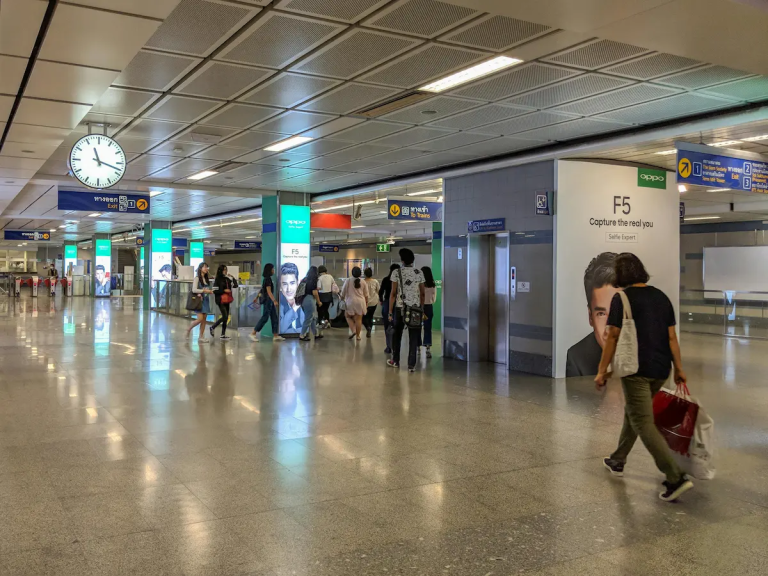
Many travellers underestimate how long it takes simply to feel comfortable. The first day is rarely about depth. It is about acclimatisation. Heat settles in. Jet lag lingers. Navigation feels unfamiliar. Even something as simple as finding your hotel from the nearest BTS or MRT station can shape your perception of the entire trip.
This is why the question of “how many days” is inseparable from the question of structure.
Two nights in Bangkok can feel rewarding if arrival is smooth and departure is not immediate. The same two nights can feel compressed if you land late at night and leave early the following morning. Three nights can feel balanced if the middle day is left open for exploration without pressure. Four nights can feel excessive if each day is packed tightly without pause.
Time in Bangkok is not simply counted in calendar days. It is shaped by arrival timing, departure positioning, and daily pacing.
There is also a psychological shift that occurs after the first twenty-four hours. On the second evening, the city usually feels less intimidating. You begin to recognise transport patterns. You identify a familiar coffee shop or food stall. You understand how long it takes to cross the river or move between neighbourhoods. What initially felt chaotic begins to feel navigable.
A well-designed Bangkok first-time itinerary accounts for this transition from orientation to immersion.
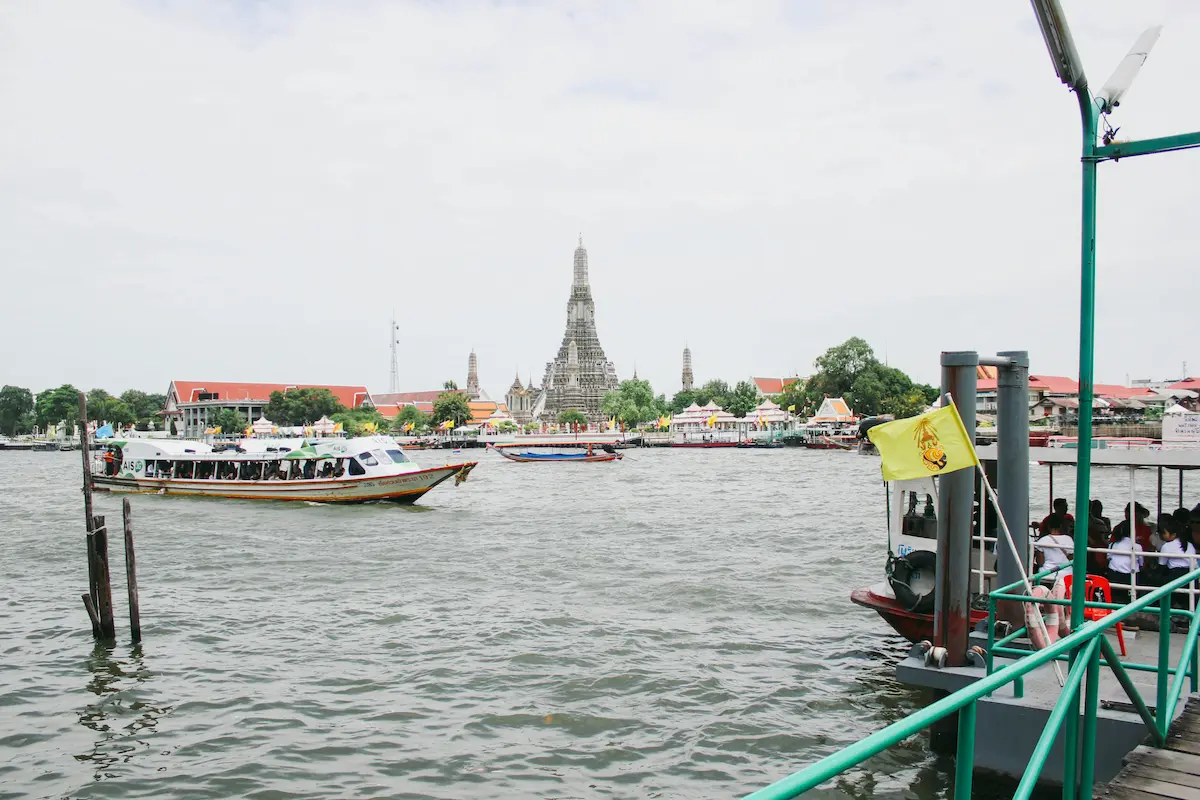
The city rewards familiarity more than many first-time visitors anticipate. Staying long enough to revisit a neighbourhood changes the experience. Returning to the same stretch of river at a different time of day alters perspective. Wandering without a fixed objective becomes possible once the pressure to “cover” the city subsides.
This is why simply asking “Is two days enough?” misses the deeper issue.
Bangkok can function as a brief introduction, a cultural anchor, or a slow immersion chapter within a larger Thailand route. Its role depends on how the trip is structured around it. Positioned at the beginning, it absorbs jet lag and sets context. Positioned at the end, it offers a stable departure base and space to decompress before flying home.
Designing a Bangkok first-time itinerary therefore requires thinking beyond attraction count. It requires considering arrival rhythm, energy flow, and how the city connects to the regions that follow.
In the sections below, we’ll examine what two, three, and four days in Bangkok actually feel like in practice. Not in terms of “must-see” highlights, but in terms of structure — what you gain, what you sacrifice, and how each duration shapes the wider journey.
Why Bangkok Feels Overwhelming on a First Visit
Bangkok can feel overwhelming on a first visit not because it is unsafe or unwelcoming, but because it demands attention. The city is dense in a way that is difficult to understand until you are inside it. Streets are active, traffic is constant, and the sensory environment rarely quiets down completely. Even when you are not doing much, the city itself is doing a lot.
A Bangkok first-time itinerary needs to account for this reality. Many visitors arrive with the assumption that day one will be productive in the same way it might be in a smaller city. They plan a list of stops, assume they will “get their bearings” quickly, and underestimate the adjustment period. In practice, the first day often functions more like a transition day than a sightseeing day.
Heat plays a major role. Bangkok’s humidity changes how long you want to be outside, how quickly you tire, and how often you need to pause. Walking twenty minutes in midday heat can feel very different from walking twenty minutes in a cool climate. That affects pacing, not just comfort. It also changes decision-making: you start choosing routes based on shade, air-conditioning, and the nearest place to sit. Even the best-planned day can become more fragmented simply because the body is responding to climate.
Scale and movement are the second factor. Bangkok neighbourhoods are distinct, but the distance between them is not always felt accurately when planning. A pin on a map might look close, yet the route involves multiple station changes, long elevated walks, or traffic bottlenecks. Taxis can be quick or painfully slow depending on time of day. Boats can feel effortless or confusing if you are unfamiliar with piers. The city offers many transport options, but choosing between them requires familiarity.
The Tourism Authority of Thailand frames Bangkok as the country’s primary transport and cultural hub, which helps explain why first impressions can feel intense before orientation settles.
This is why the early phase of a Bangkok first-time itinerary often contains more micro-decisions than expected: where to exchange money, how to buy a transit card, which station exit to take, how to avoid standing on the wrong side of a platform, whether a ride-hailing pickup point is actually accessible. None of these decisions are difficult. They are simply constant.
The third factor is stimulus. Bangkok contains layers of sound, signage, crowds, smells, and visual information that can feel exhilarating at first and tiring after a few hours. Markets are vivid. Major roads are loud. Side streets can be calmer but still active. For some travellers, this intensity is exactly what they came for. For others, it quietly drains energy even while they are enjoying themselves.
This is also why many first-time visitors misjudge how much they can do per day. They plan Bangkok like a sequence of attractions, moving from point to point. In reality, the city is better experienced when the day has slack — time to sit, time to reset, time to change direction without penalty. Without that slack, the trip begins to feel like constant motion without absorption.
If you want to make sense of this without turning the itinerary into a rigid schedule, it helps to think in terms of pacing rather than activity. In Travel Pacing Explained: How to Choose Slow, Balanced, or Fast (And Not Regret It), we break down how different pacing styles change the feel of a trip — and why fast pacing often feels harsher in high-stimulus cities.
Bangkok does not require you to slow down. It requires you to structure your days so that the city’s natural intensity doesn’t take control of the itinerary.
When pacing is designed intentionally, Bangkok shifts from overwhelming to layered. The city begins to feel navigable. Neighbourhoods become legible. The noise becomes texture rather than pressure. A Bangkok first-time itinerary works best when it plans for that shift instead of demanding productivity before it arrives.
2 Days in Bangkok: What You Gain (And What You Miss)
Two days in Bangkok is common in many Thailand routes. Flights arrive, travellers spend two nights in the city, and then continue north or south. On paper, it appears efficient. Bangkok is often positioned as a gateway rather than a destination in its own right.
Whether two days works depends almost entirely on structure.
A Bangkok first-time itinerary built around two nights can feel satisfying if arrival timing is favourable. For example, landing mid-morning allows for a gentle first afternoon and evening. The second day becomes a full exploration day. Departure on the third morning preserves most of the second day intact. In this configuration, two nights function as roughly one and a half to two full days of usable time.
The experience is compact but coherent.
However, two nights can feel compressed very quickly. If arrival is late in the evening and departure requires an early airport transfer, the usable time shrinks significantly. What looked like two days becomes one functional day and fragments of two others. The difference between these two scenarios is not the number of nights — it is the placement of movement within them.
This is why we consistently emphasise arrival positioning in Arrival and Departure Days Matter: The Most Ignored Itinerary Rule. Two nights is not inherently too short. But when the edges of the stay are consumed by travel logistics, the interior compresses.
With two days, expectations must also be adjusted.
You will likely experience Bangkok as a series of highlights rather than layers. A temple complex, a river boat ride, a night market, perhaps one rooftop view. These experiences can be vivid and memorable. Yet what you may miss is familiarity. The city rarely has time to shift from overwhelming to navigable within two nights.
On a first visit, orientation occupies more space than anticipated. Learning the transport system, understanding neighbourhood boundaries, and adapting to climate can absorb much of the first day’s cognitive bandwidth. This is not wasted time. It is foundational time. But in a two-day stay, that foundation consumes a larger percentage of the trip.
A Bangkok first-time itinerary of two days works best when the broader Thailand route supports it. For example, if the primary focus of the trip is an island stay or time in Chiang Mai, Bangkok can function as a concentrated urban chapter. It introduces cultural context and contrast without demanding deep immersion.
Two days also suits travellers who thrive on movement. If you enjoy high-density exploration and are comfortable navigating busy cities quickly, two nights may feel efficient rather than rushed.
Where two days tends to struggle is in balancing intensity and recovery. Bangkok demands energy. Without a third day to redistribute that intensity, the stay can feel like a rapid introduction rather than a rounded experience.
Another subtle limitation is neighbourhood depth. Bangkok’s character changes dramatically between areas — the river districts feel different from Sukhumvit, which feels different from the Old City or Ari. In two days, movement between these zones often prioritises landmarks over wandering. You see places. You rarely inhabit them.
This is not inherently negative. It simply defines the scope.
When considering whether two days is enough for your Bangkok first-time itinerary, ask a structural question rather than an emotional one: will these days be full exploration days, or are they partially absorbed by travel transitions? If the latter, the stay may feel thinner than expected.
Two nights can introduce Bangkok well. It rarely allows the city to settle.
3 Days in Bangkok: The Most Balanced Structure
For most travellers, three nights in Bangkok produces the most balanced experience. It allows for adjustment, exploration, and recovery without compressing the city into a rapid introduction. A Bangkok first-time itinerary built around three full days typically feels coherent rather than hurried.
The structural advantage of three nights lies in how the days separate from one another.
The first day often absorbs arrival and orientation. Even if you land early, the body and mind are still adjusting. Heat, traffic patterns, and navigation decisions require more attention than expected. With three nights, that first day can remain intentionally light — perhaps a short walk, a river crossing, a simple evening meal — without pressure to “make up for lost time.”
The second day becomes the primary exploration day. This is when most visitors feel ready to engage more deeply. Major temple complexes, museum visits, or neighbourhood exploration can unfold without the cognitive load of first-day orientation. The city feels slightly more legible. Transport decisions feel easier. Energy distribution becomes more predictable.
The third day is where three nights begins to distinguish itself from two.
Rather than squeezing in additional attractions, the third day often provides depth. It allows you to revisit a district at a slower pace, explore a different neighbourhood entirely, or spend time wandering without a strict endpoint. It is also the day when Bangkok often shifts from overwhelming to layered. Familiarity begins to soften intensity.
This familiarity changes perception. Streets that felt chaotic on day one feel navigable. Crossing the river no longer feels like a logistical challenge. Ordering food feels simpler. The city stops being something to manage and starts being something to inhabit.
A Bangkok first-time itinerary of three nights also distributes energy more evenly across the wider Thailand trip. If Bangkok is your arrival point before heading north or south, three nights prevents the beginning of the trip from feeling rushed. It sets a steady tone before introducing regional contrast.
If Bangkok is positioned at the end of your journey, three nights offers a decompression phase before departure. Rather than treating the city as a transit stop, it becomes a closing chapter that consolidates the experience.
There is also a psychological dimension to three nights that is often overlooked. When travellers know they have a third day, the urgency to “see everything” decreases slightly. This reduces decision pressure. It becomes easier to allow for pauses — a longer lunch, time in a shaded café, a second visit to a neighbourhood that felt interesting.
This shift aligns with broader route structure. In our Thailand 10-Day Itinerary: 3 Routes That Actually Work, Bangkok is typically allocated three nights in balanced routes. The reason is not attraction density. It is pacing logic.
Three nights absorbs unpredictability better than two. If weather shifts, if traffic slows movement, or if fatigue appears earlier than expected, the itinerary has room to adapt without collapsing.
Of course, three nights is not mandatory. Some travellers thrive on shorter, sharper urban stays. Others prefer four nights for slower immersion. But for most first-time visitors, three nights creates a stable middle ground between exposure and depth.
It allows Bangkok to function not just as a list of landmarks, but as a lived environment — even briefly.
A Bangkok first-time itinerary structured around three nights respects both the city’s intensity and the traveller’s energy. It acknowledges that orientation requires time and that familiarity enhances experience.
In structural terms, three nights is not about seeing more. It is about seeing steadily.
4 Days in Bangkok: Who It’s Actually For
Four days in Bangkok can feel generous on paper. Many travellers hesitate at the idea of allocating that much time to a single city when there are islands and mountain towns elsewhere in Thailand. Yet for certain travel styles, four nights produces the most settled version of a Bangkok first-time itinerary.
The key difference between three and four nights is not attraction count. It is rhythm.
With four nights, there is space not just for orientation and exploration, but for true slack. The city begins to feel less like a chapter that must be completed and more like a place you are temporarily living in. Decisions become less urgent. You are not measuring each afternoon against a departure clock.
This structure suits travellers who prefer slower immersion. If you enjoy wandering without a fixed objective, lingering in neighbourhood cafés, or revisiting the same stretch of river at different times of day, the additional night allows that behaviour without guilt. It also suits those who are sensitive to climate. Heat recovery becomes part of the day rather than a disruption to it.
A four-night stay also absorbs unpredictability more comfortably. Heavy rain, traffic congestion, or simple fatigue no longer compress the experience as easily. In shorter stays, unexpected slowdowns can feel costly. In longer stays, they feel integrated.
The city’s scale begins to reveal itself more gradually. You may explore the Old City one day, a riverside district another, and a residential neighbourhood on a third. Instead of moving quickly between landmarks, you move within districts. Bangkok’s texture — the transitions between quiet lanes and busy avenues, the way morning markets differ from evening ones — becomes more visible.
However, four days is not universally beneficial.
If Bangkok is only one chapter in a tightly structured Thailand route, extending it to four nights may reduce time available elsewhere. For travellers whose primary goal is coastal relaxation or mountain trekking, allocating four nights to the capital can create imbalance. A Bangkok first-time itinerary should align with the broader purpose of the trip.
Four nights also requires discipline. Extra time does not automatically produce depth. Without intentional pacing, it can simply stretch the same list of attractions over more days. The benefit comes when the additional time is used to reduce pressure rather than increase coverage.
This is where buffer becomes valuable. In Buffer Time in Itineraries: The Difference Between Smooth and Stressful Travel, we discuss how structural slack changes the emotional tone of a trip. Four nights in Bangkok effectively builds that slack into the urban chapter.
It allows for spontaneous decisions. It allows for minor detours. It allows for recovery after a long-haul flight without sacrificing exploration.
For travellers combining Bangkok with longer regional stays — such as an extended island base or a multi-day trek — four nights can create a balanced opening before movement resumes. It ensures the city feels experienced rather than skimmed.
Ultimately, four days is not about ambition. It is about comfort with stillness inside a large city.
A Bangkok first-time itinerary of four nights works best for travellers who value immersion over efficiency, who are comfortable moving slowly through complex environments, and who want the capital to feel like more than a gateway.
When used intentionally, four nights does not dilute the trip. It deepens the urban chapter.
Where Bangkok Fits in a Larger Thailand Route
Bangkok rarely exists in isolation. For most travellers, it is one chapter within a broader Thailand journey. How it is positioned — at the beginning, middle, or end — has a significant impact on how the entire route feels.
A Bangkok first-time itinerary functions differently depending on that placement.
Bangkok at the Beginning
Starting in Bangkok is the most common structure. International flights arrive there, and the city offers infrastructure that absorbs long-haul travel efficiently. Positioned at the beginning of the trip, Bangkok serves as an adjustment zone.
This is where arrival rhythm becomes crucial. The first two nights should be structured with awareness of jet lag, climate shift, and cognitive load. If Bangkok is compressed too tightly at the beginning, the entire trip can begin slightly unsettled.
When designed properly, however, Bangkok at the start provides cultural context. It introduces Thai food, temple architecture, transport systems, and urban energy before the route branches north or south. By the time you reach Chiang Mai or the islands, you understand the country’s rhythm more clearly.
In our broader guide to Thailand Itinerary Planning: The Real Rules Nobody Tells You, we emphasise that first chapters set the tone. Bangkok works best when it absorbs arrival pressure rather than amplifies it.
Bangkok in the Middle
Placing Bangkok in the middle of a route is less common but sometimes necessary due to flight connections. Structurally, this is the most delicate position.
A mid-trip Bangkok stay can feel disruptive if it interrupts a steady regional arc. For example, moving from Chiang Mai to Bangkok and then immediately to an island may introduce unnecessary resets. Each return to the capital requires reorientation — transport decisions, neighbourhood choice, accommodation shifts.
If Bangkok must sit in the middle, the stay should either be brief and logistical or long enough to justify the reset. Two tightly packed nights between regions often feel like friction rather than flow.
Bangkok at the End
Ending in Bangkok is often structurally cleaner. It reduces last-day transport risk and allows for buffer before international departure. Positioned at the end, a Bangkok first-time itinerary becomes a decompression phase rather than an adjustment phase.
This placement changes how the city feels. Rather than absorbing jet lag, it consolidates memory. You may revisit favourite foods, purchase final gifts, or explore neighbourhoods missed earlier. The urgency to “cover” the city diminishes because the rest of the trip has already unfolded.
From a structural perspective, ending in Bangkok also protects against unforeseen delays. Long-haul departure is less stressful when the final nights are close to the main airport.
Integrating with the North and South
When combining Bangkok with Chiang Mai and the islands, the sequence matters.
A common balanced structure is:
Bangkok → Chiang Mai → One island base → Return to Bangkok (briefly) for departure.
This arc introduces contrast gradually and resolves gently. It avoids excessive zigzagging. The north–south shift happens once, rather than repeatedly.
A Bangkok first-time itinerary that attempts to insert multiple returns to the capital can feel fragmented. Each re-entry resets momentum. Even though Bangkok is familiar by the second stay, the shift in climate and environment is still noticeable.
The simplest routes often feel the most coherent.
Bangkok → One region → Departure
or
Bangkok → North → South → Departure
What typically weakens structure is:
Bangkok → North → Bangkok → Island → Bangkok → Departure
Even if each segment is individually reasonable, the cumulative transitions accumulate.
The role Bangkok plays should be deliberate. It is either the introduction, the consolidation, or a short logistical bridge. It rarely functions well as a repeated pivot point within a short trip.
A Bangkok first-time itinerary becomes strongest when it aligns with the broader arc of the journey rather than competing with it.
When placed intentionally, Bangkok anchors the route. When inserted reactively, it interrupts it.
The Real Question Isn’t Days. It’s Structure.
By this point, the pattern should be clear. The question of whether you need two, three, or four days in Bangkok is not purely numerical. It is structural.
A Bangkok first-time itinerary does not succeed because it includes a specific number of landmarks. It succeeds because it respects how the city feels to navigate, how energy shifts across the day, and how it connects to the rest of your Thailand route.
Two nights can work if they are protected from heavy travel compression. Three nights offers balance for most first visits. Four nights provides immersion and buffer for those who prefer slower urban exploration. None of these durations are inherently correct. They are only correct relative to the broader arc of the trip.
This is where many travellers misjudge the decision. They focus on attraction coverage rather than sequencing. They ask, “Can I see the Grand Palace, Wat Arun, Chatuchak, Chinatown, and a rooftop bar in two days?” instead of asking, “How will arrival timing, climate, and departure placement shape these days?”
Bangkok is not difficult to visit. It is easy to over-schedule.
Structure determines whether the city feels invigorating or exhausting. A tightly packed first day after a long-haul flight can colour the entire stay. A mid-trip insertion between two regional shifts can fragment momentum. A final night far from the airport can introduce unnecessary anxiety before departure.
When viewed through a structural lens, the right duration often becomes obvious.
If Bangkok is your first exposure to Thailand, allow enough time for adjustment. If it is your final chapter, allow enough time for consolidation. If it is one segment in a multi-region route, ensure its placement strengthens the arc rather than interrupting it.
A Bangkok first-time itinerary should not compete with the rest of your trip. It should support it.
The city rewards those who slow down just enough to recognise patterns — the rhythm of river boats, the logic of BTS lines, the way neighbourhoods change between morning and night. That recognition rarely happens in a single rushed day.
This is also why Bangkok often feels better in retrospect when structured carefully. Travellers who allocate time for familiarity frequently describe the city as layered and dynamic. Those who compress it tightly sometimes remember it as chaotic or overwhelming. The difference is rarely the city itself. It is the design around it.
If you would like help shaping your Bangkok stay within the wider context of your Thailand route — deciding how many nights, where to stay, and how to sequence movement — you can explore our Thailand itinerary planning service for structured support. Sometimes a small adjustment in placement changes the entire tone of the trip.
Ultimately, the number of days matters less than how those days are arranged.
Bangkok does not demand speed. It demands clarity of structure.
FAQs
1) Is two days enough for a Bangkok first-time itinerary?
Two nights can work if arrival and departure timing are favourable. If travel days consume large portions of the stay, the experience can feel compressed. Structurally, two nights works best when Bangkok is a brief introduction within a wider Thailand route.
2) Is three days in Bangkok too much?
For most first-time visitors, three nights provides balance. It allows for arrival adjustment, one full exploration day, and a second day that feels less pressured. Three nights often prevents the city from feeling rushed.
3) Should I stay longer in Bangkok or spend more time in Chiang Mai or the islands?
That depends on the role Bangkok plays in your trip. If it is your cultural anchor and entry point, three nights is usually appropriate. If your primary goal is beach or mountain time, Bangkok may function well as a shorter urban chapter.
4) Is Bangkok overwhelming for first-time visitors?
It can feel intense initially due to heat, traffic, and density. However, most travellers find that the city becomes more navigable after the first full day once transport patterns and neighbourhood layouts begin to make sense.
5) Where should I stay in Bangkok for a first visit?
Choose a location near reliable transport (BTS or MRT) rather than focusing solely on landmarks. Ease of movement shapes the experience more than proximity to any single attraction.
6) Should Bangkok be at the beginning or end of my Thailand trip?
Both can work. At the beginning, Bangkok absorbs arrival adjustment. At the end, it provides a stable departure base. What matters most is how smoothly it connects to the rest of your route.