
Thailand Street Food: Kai Jeow (Thai Omelette)
Quick Facts
Thai Name: ไข่เจียว (Kai Jeow)
English Name: Thai Omelette
Typical Price: Approximately 40–80 baht (50 baht paid in Patong at the time of writing)
Spice Level: Mild
Common Ingredients: Egg, pork, shrimp, crab, vegetables, herbs
Typically Found At: Street food stalls, markets, roadside food carts and food courts
Best Time To Eat: Breakfast, lunch, dinner or a late-night snack
Cooked To Order: Yes
Traveller Friendly: Yes
Kai Jeow is one of the most common dishes found at street food stalls throughout Thailand. Often described as a Thai omelette, this simple meal combines eggs, seasoning and a choice of ingredients before being cooked quickly in a hot wok and served fresh to order.
While Kai Jeow may look like a simple omelette, ordering one from a local street food stall is often part of the experience. Customers select their ingredients, watch the vendor prepare the dish in front of them, and within minutes receive a hot meal ready to eat.
In this Thailand Street Food guide, we’ll explore what Kai Jeow is, how it is prepared, what it tastes like, and what visitors can expect when ordering this popular Thai street food dish for themselves.
Before diving into the details, here’s a quick look at how Kai Jeow is typically prepared at a Thai street food stall.

What Is Kai Jeow?
Kai Jeow is a Thai-style omelette made from beaten eggs and a selection of additional ingredients such as pork, shrimp, crab, onion, herbs or vegetables. Unlike many Western omelettes, Kai Jeow is typically cooked in very hot oil, creating a golden exterior with crispy edges while remaining soft inside.
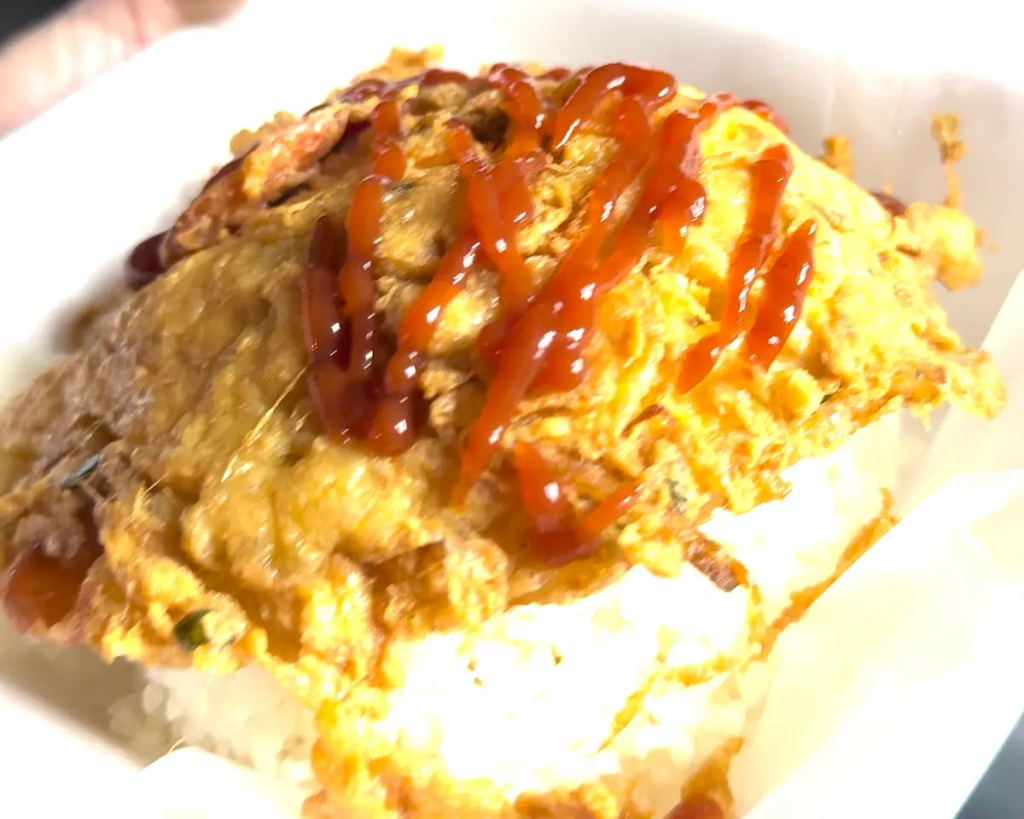
The dish is popular throughout Thailand and can be found everywhere from local restaurants and food courts to roadside street food stalls. While some versions are served with rice as a complete meal, street food vendors often prepare Kai Jeow fresh to order and package it in a takeaway container for customers to enjoy on the go.
Its combination of simple ingredients, quick preparation and affordable price has made Kai Jeow one of the most common everyday foods found in Thailand.
A Common Sight on Thai Streets
One of the reasons Kai Jeow is so popular is that it can be found at countless street food stalls throughout Thailand. In many towns and cities, vendors operate from small roadside carts, compact food stalls or motorbike-based kitchens that can be set up almost anywhere.
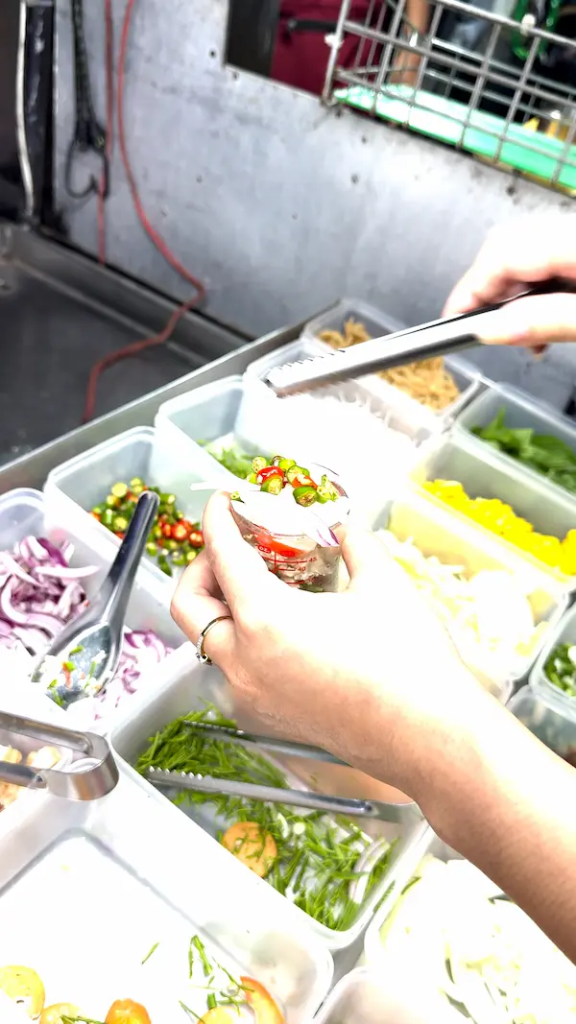
A typical Kai Jeow stall often displays a variety of ingredients in small containers, allowing customers to customise their meal. Depending on the vendor, these may include pork, shrimp, crab, vegetables, herbs and other additions that can be mixed into the omelette before cooking.
For many travellers, these stalls can seem a little confusing at first. Unlike restaurants where meals are selected from a menu, the ordering process is often visual and based on the ingredients displayed in front of you. However, once you understand how the system works, ordering Kai Jeow is surprisingly simple and provides a glimpse into Thailand’s everyday street food culture.
How Ordering Kai Jeow Usually Works
While every vendor has their own approach, the process of ordering Kai Jeow at a typical street food stall is often straightforward once you understand how it works.
Customers begin by selecting the ingredients they would like added to their omelette. At many stalls, these ingredients are displayed in small glasses or containers near the cooking area. Common choices include pork, shrimp, crab, vegetables and herbs, although the exact options vary from stall to stall.
After making their selection, customers place the ingredients into one of the glasses and either hand it to the vendor or place it on the counter. The vendor then combines the ingredients with beaten egg and seasoning before pouring the mixture into a hot wok.
Within a few minutes, the Kai Jeow is cooked, placed into a takeaway container and prepared for collection. Some vendors offer sauces that can be added before the container is closed, while others provide them separately.
The entire process is quick, efficient and easy to follow, making Kai Jeow one of the most accessible street food dishes for visitors wanting to experience everyday food culture in Thailand.

Watching It Being Prepared
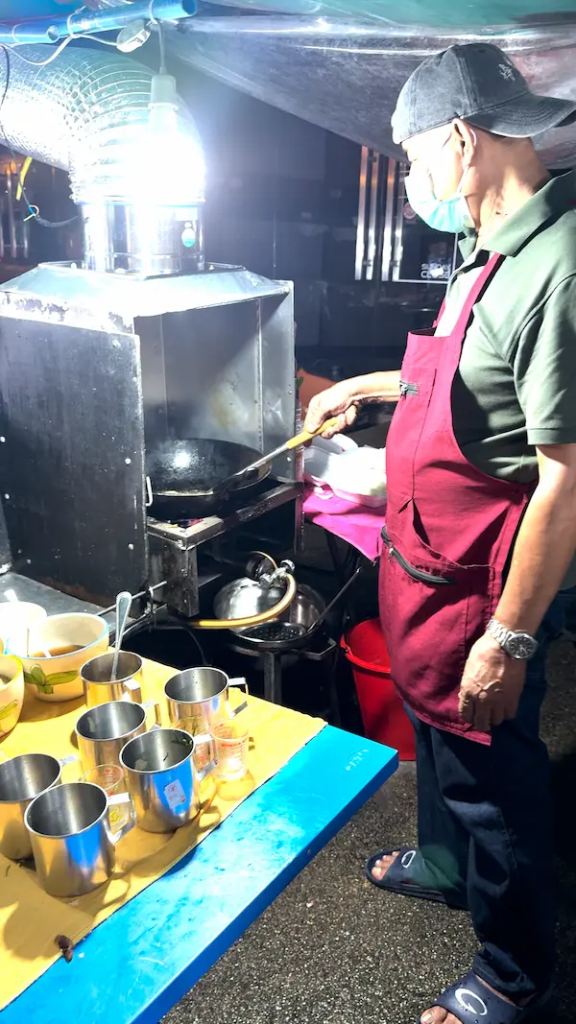
One of the most enjoyable parts of ordering Kai Jeow from a street food stall is watching it being prepared. Once the ingredients and egg mixture are ready, the vendor works quickly, using a hot wok and oil to cook the omelette in just a few minutes.
As the mixture hits the oil, the egg begins to bubble and puff up almost immediately. The vendor constantly moves and shapes the omelette while it cooks, helping create the crispy golden exterior that Kai Jeow is known for. The process is fast, skilful and often surprisingly entertaining to watch.
Unlike pre-prepared food that may have been sitting on display for hours, Kai Jeow is typically cooked fresh for each customer. From selecting your ingredients to receiving the finished meal, the entire experience often takes less than five minutes.
For travellers exploring Thailand’s street food scene, watching a simple dish being prepared from start to finish provides a small but authentic glimpse into the rhythm of everyday life at a local food stall.
What Does Kai Jeow Taste Like?
Despite its simple appearance, Kai Jeow offers a combination of textures that makes it a popular choice throughout Thailand. The outside is typically golden and slightly crispy, while the inside remains soft, light and fluffy.
The flavour is savoury rather than spicy, making it an approachable option for travellers who may be new to Thai street food. The additional ingredients selected by the customer also influence the final taste. Pork adds richness, shrimp provides a seafood flavour, while vegetables and herbs can add freshness and texture.
Because Kai Jeow is cooked to order, it is usually served hot and fresh from the wok. Combined with the crispy exterior created by the cooking process, this gives the dish a comforting and satisfying quality that helps explain its popularity as an everyday meal.
For visitors looking to try Thai street food without immediately jumping into stronger flavours or very spicy dishes, Kai Jeow is often an easy and enjoyable place to start.
Why Kai Jeow Is So Popular in Thailand
Part of the appeal of Kai Jeow is its simplicity. The ingredients are inexpensive, the cooking process is quick and the finished meal is both filling and satisfying. For many people, it offers an affordable option that can be prepared fresh in just a few minutes.
Another reason for its popularity is flexibility. Customers can often choose their own ingredients, allowing each Kai Jeow to be tailored to individual tastes. Whether someone prefers pork, shrimp, crab or a mixture of ingredients, the basic cooking process remains the same while the final flavour changes.
Kai Jeow is also widely available. From busy city streets and local markets to small roadside stalls and food courts, it can be found throughout Thailand at almost any time of day. In tourist areas such as Patong, it is common to find vendors still cooking Kai Jeow late into the evening when many other dining options have closed.
Another reason for the dish popularity is affordability. While food prices in Thailand have gradually increased over the years, Thai omelette remains one of the more inexpensive meals available at many street food stalls. A Kai Jeow I purchased in Patong just a few nights ago cost 50 baht, making it one of the few meals that still comfortably sits in the budget-friendly category. Combined with its filling nature and fresh preparation, this helps explain why it remains a popular choice among both locals and visitors.
For travellers exploring Thailand street food, Kai Jeow is often one of the easiest dishes to find, understand and enjoy. Its combination of affordability, convenience and fresh preparation has helped make it a lasting favourite among both locals and visitors.
Should You Try Kai Jeow?
If you’re visiting Thailand and want to experience everyday street food rather than dishes designed specifically for tourists, Kai Jeow is well worth trying.
One of its biggest advantages is accessibility. Unlike some Thai dishes that can be extremely spicy or rely on unfamiliar flavours, this is easy to enjoy for most visitors. The ingredients are simple, the flavours are familiar and the dish is prepared fresh in front of you.
Kai Jeow is also a good introduction to Thailand street food because the ordering process is easy to understand once you’ve seen it a few times. Choosing your ingredients, watching the meal being cooked and collecting the finished container is all part of the experience.
Personally, I wouldn’t describe an omelette as the most exciting street food dish in Thailand. However, that isn’t really its role. Its appeal comes from being affordable, widely available and consistently satisfying. Whether you’re looking for a quick lunch, an easy dinner or a late-night snack after exploring Patong, Kai Jeow is one of those reliable dishes that is never far away.
For travellers wanting to experience everyday food culture rather than simply eat at restaurants, Kai Jeow offers a simple and authentic introduction to life at a Thai street food stall.
Final Thoughts
Kai Jeow may be a simple dish, but it offers a useful introduction to Thailand street food and the everyday food culture found throughout the country. From selecting ingredients and watching the cooking process to collecting a freshly prepared meal, the experience is about more than just the omelette itself.
While there are certainly more famous dishes in Thailand, this food remains one of the most accessible and widely available options for travellers wanting to try local street food. Whether you discover it at a market, a roadside stall or a small motorbike food cart in Patong, it provides a glimpse into a style of eating that millions of people enjoy every day.
If you see a Kai Jeow stall during your travels in Thailand, consider stopping for a few minutes and giving it a try. It may not be the most complicated meal you’ll eat, but it is one of the simplest ways to experience Thailand’s street food culture for yourself.
Explore More Food Experiences in Thailand
Trying dishes such as Kai Jeow from local street food stalls is one of the simplest ways to experience everyday life in Thailand. However, for travellers wanting a deeper introduction to Thai food culture, guided food tours, local markets and cooking classes can provide the opportunity to discover a much wider range of flavours and traditions.
Whether you’re interested in exploring a busy local market, sampling regional dishes or learning how Thai food is prepared, food-focused experiences can offer insights that are difficult to gain when travelling independently.
Interested in exploring Thai food experiences during your visit? View our recommended food tours and cooking experiences.
Frequently Asked Questions – Kai Jeow (Thai Omelette)
What is Kai Jeow?
It is a Thai-style omelette made from beaten eggs and a choice of ingredients such as pork, shrimp, crab or vegetables. It is one of the most common dishes found at street food stalls throughout Thailand.
Is Kai Jeow spicy?
Traditional Kai Jeow is not usually spicy. However, some vendors may offer chilli sauces or condiments that can be added separately.
How much does Kai Jeow cost in Thailand?
Prices vary depending on location and ingredients, but Kai Jeow is generally considered an inexpensive meal. At the time of writing, a Kai Jeow purchased from a street food stall in Patong cost 50 baht.
What ingredients can be added to Kai Jeow?
Common additions include pork, shrimp, crab, onion, herbs and vegetables. Available ingredients vary between vendors.
Is Kai Jeow a good choice for first-time visitors to Thailand?
Yes. Kai Jeow is one of the more approachable Thai street food dishes. The flavours are familiar, the spice level is usually mild and the dish is prepared fresh to order.
Can Kai Jeow be eaten at any time of day?
Yes. Kai Jeow is commonly eaten for breakfast, lunch or dinner and is also a popular late-night meal at many street food stalls.
Where can I find Kai Jeow in Thailand?
Kai Jeow is widely available throughout Thailand and can commonly be found at street food stalls, local markets, food courts and small roadside food vendors.
Is Kai Jeow cooked fresh?
In most cases, yes. Street food vendors typically prepare Kai Jeow after receiving an order, allowing customers to watch the cooking process from start to finish.
About the Author
David Hibbins is a Phuket-based travel publisher, photographer and writer focused on helping travellers make better travel decisions through research, destination understanding and real-world travel experience.
He is the founder of Go Find Asia, a destination discovery platform exploring the geography, experiences, culture and travel decisions that shape destinations across Thailand and Asia. Through detailed destination research and long-form travel content, Go Find Asia helps travellers move beyond surface-level recommendations and develop a deeper understanding of the places they explore.
David is also the founder of Travel With Insight, a travel media ecosystem designed to help tourism businesses connect with travellers throughout the modern travel discovery journey. Through destination-focused publications, editorial content, digital media and long-term visibility opportunities, Travel With Insight helps businesses remain discoverable as travellers move between search engines, AI tools, social media, destination guides and travel research platforms.
Alongside these publishing projects, David is co-owner of Resurgence Travel, a Phuket-based travel company focused on curated holidays, experiences and practical travel planning for visitors exploring Phuket and southern Thailand.
Together, these projects combine destination research, travel publishing and real-world travel experience to help travellers better understand destinations while helping tourism businesses connect with the audiences most likely to value what they offer.
This article forms part of an ongoing effort to document, understand and explain the destinations, experiences and geographic systems that shape Phuket and the wider Andaman region.